Belline
Belline Oracle in Love: The 12 Cards That Matter
The 12 Belline Oracle cards that speak of love, read planet by planet, with 10 combinations and the cards everyone misreads: Betrayal, Fatality.
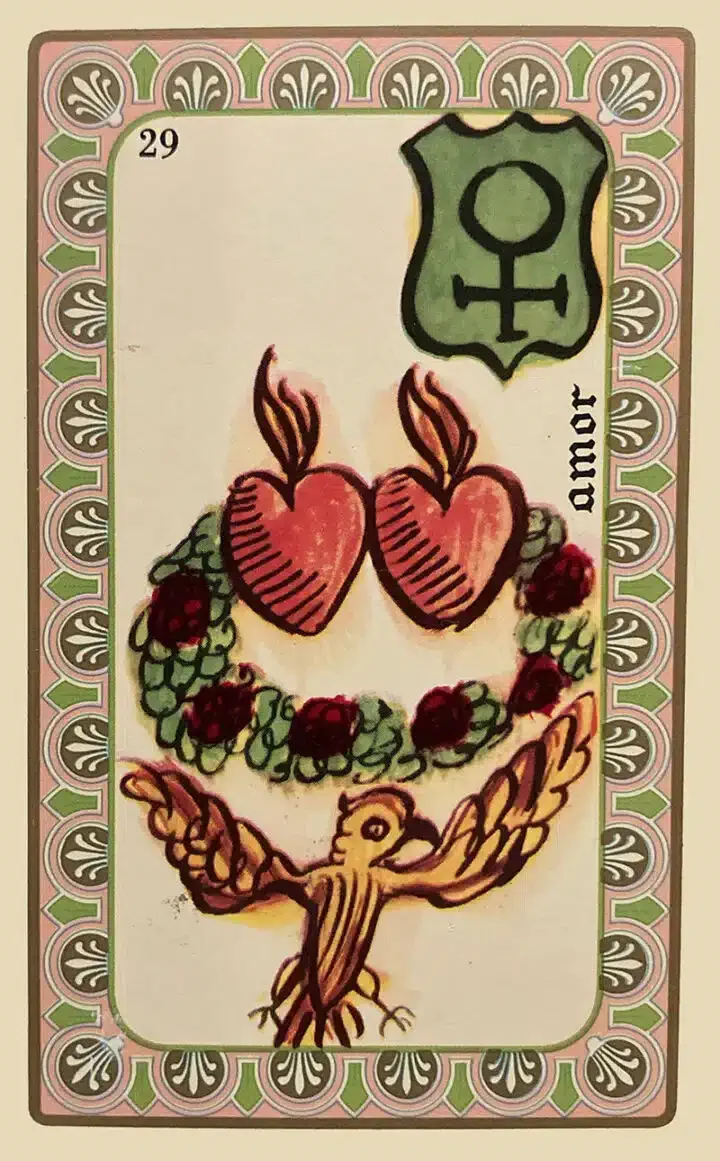
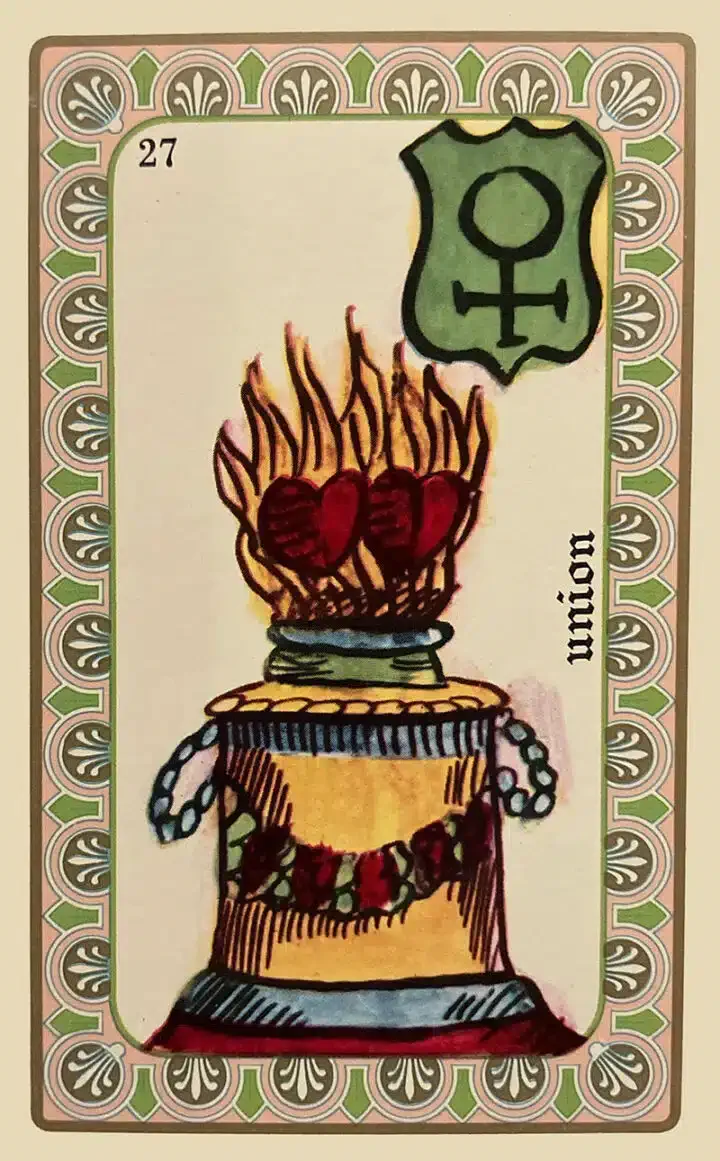
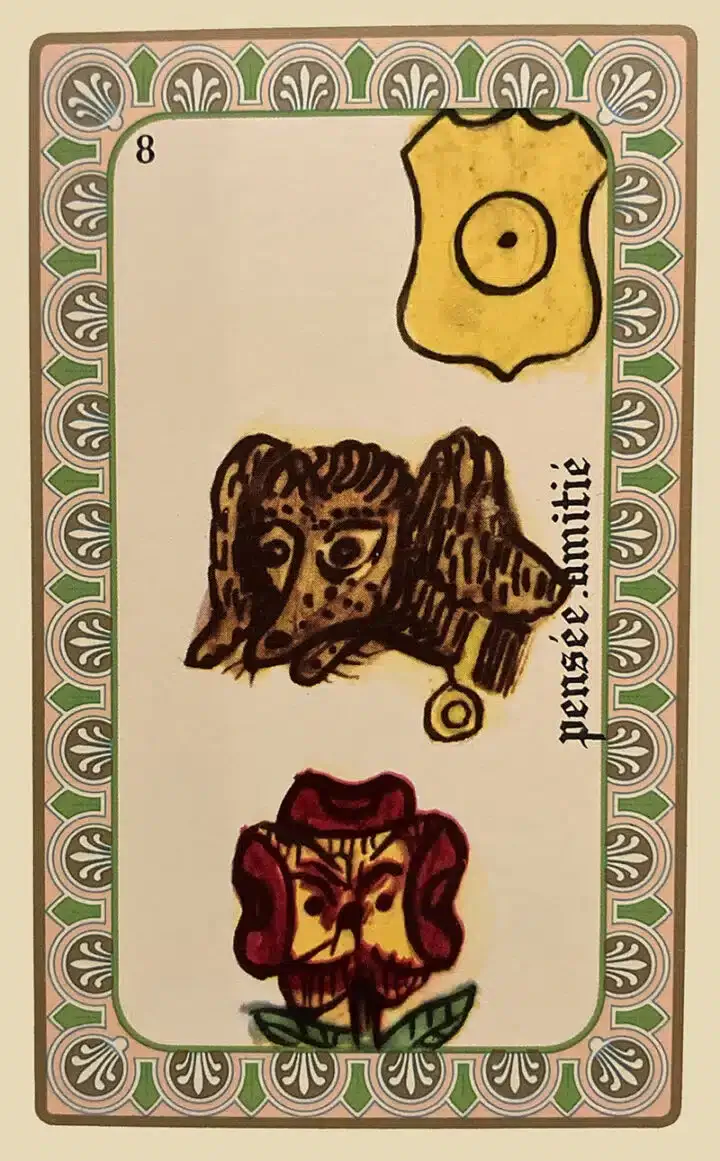
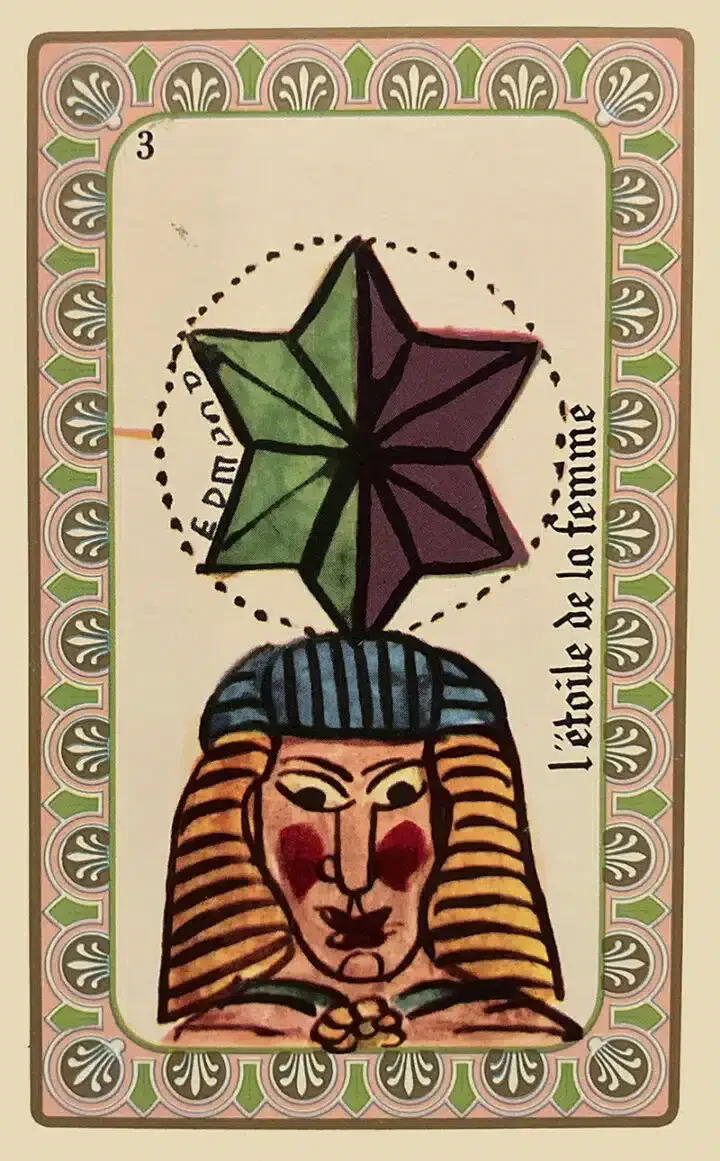
Love · Union · Thought & Friendship · Star of Woman
You asked the Belline Oracle a question about love, and it answered with fifty-three cards, many of which talk about money, lawsuits and travel. Which ones actually matter? Twelve. Five Venus cards for feelings, two Moon cards for home and hesitation, two Mercury cards for thoughts and messages, two Mars cards for desire and hurt, one Saturn card for what can no longer be negotiated. Plus the two Stars, which tell you who is who. This guide reads them one by one, then in combinations, before the cards everyone reads too fast.
Key takeaways
- In love, the Belline is read by planetary family: Venus speaks of feeling, the Moon of attachment and mood, Mercury of thoughts and messages, Mars of desire and conflict, Saturn of trials and time.
- The two Stars (Man, Woman) predict nothing: they point to people. Without them, you don’t know who the other cards are talking about.
- No card says “they’re coming back” or “they’re cheating” on its own. The Belline answers in sequences of two or three cards.
- Betrayal and Fatality are the most misread cards in the deck: wounded trust and a situation that is no longer negotiable, not a verdict.
- A three-card spread is enough for a love question, as long as you take the Stars out first.
Why the Belline is so precise about feelings
The Belline Oracle owes its finesse to its structure: forty-nine of its fifty-three cards belong to seven planetary families, and each planet speaks a different emotional register. Where an ordinary oracle says “love” or “breakup,” the Belline separates feeling (Venus), attachment (Moon), thought (Mercury), desire (Mars) and trial (Saturn).
That structure comes from the deck’s designer, the seer known as Edmond, who worked in mid-nineteenth-century Paris with the astrological correspondences of his time. The Parisian clairvoyant Belline had the deck published in 1960-1961 without changing its logic. The result is a deck where a question of the heart rarely gets a flat answer: it tells you what kind of bond this is, not just whether it exists.
The Belline is still a niche deck in the English-speaking world, and most printed editions are French, so the names on your cards may be in French. Every card in this guide comes with its number in brackets: that is the surest way to match them. If you are new to the deck, the Belline guide and the seven planets page lay the groundwork before the card-by-card detail.
The Belline doesn’t answer “yes” or “no” to a love question. It answers “this is the kind of bond you are in.”
First, the two person cards
Before any love reading, find Star of Man (2) and Star of Woman (3). They are the deck’s person cards: they predict nothing, they show who is who. One stands for the person asking, the other for the person being asked about. Cards touching a Star describe that person; cards placed between the two describe the relationship.
Three rules are enough. A card right next to your Star talks about you, not the other person: Inconstancy beside your card describes your own hesitation. A card between the two Stars talks about the bond itself. A Star missing from the spread means that person isn’t at the center of the situation, whatever you asked.
For a couple of two women or two men, decide before shuffling which Star stands for whom, or use one Star for yourself and let the other person show up through the Venus and Mercury cards. The deck was drawn in the nineteenth century; your reading doesn’t have to be.
The 12 cards that speak of your relationships
They are presented by planet, because that is how the Belline thinks: register first, nuance second.
Venus, the five cards of feeling. They cover the whole register of the heart, from a feeling being born to attraction: they are the first cards to spot in a love reading.
Love (29)
Love is the card of a feeling being born or confirmed. It says a sincere emotion is present in the situation, on your side or the other’s, depending on which Star it touches. On its own, it announces neither a meeting nor a commitment: it simply notes that the heart is involved.
In good company (Union, Happiness, Gifts), it promises a relationship taking shape. Next to Inconstancy or Delay, the feeling is real but it drifts or it waits. Next to Betrayal, the heart is engaged exactly where trust has been hurt, and that is precisely what makes it painful.
Union (27)
Union is commitment: a couple forming, a marriage, the decision to live together, the emotional contract. Where Love speaks of emotion, Union speaks of structure. It is the card you hope for when you ask “is this serious?”
With Family, it sketches a life plan. With Negotiations, it says a commitment is being discussed. With Departure or Inconstancy, it describes an official bond that one of the two no longer really holds.
Pleasures (25)
Pleasures covers sensuality, happy moments, lightness together. It is the card of beginnings, weekends away, reunions. It says the relationship feels good in body and mood, without saying anything about how long it will last.
With Love, it is a complete relationship. With Passions, it is an intense affair that burns fast. Alone, at the center of a spread about a couple’s future, it invites an honest question: is there anything here besides pleasure?
Gifts (10)
Gifts are attentions: a present, a gesture, an invitation, a pleasant surprise. In love, the card says someone is thinking of ways to please you, or that you are receiving more than you give right now.
Next to the other person’s Star, it describes someone generous, or someone trying to win you over. Next to Betrayal, be wary of gestures that compensate: people sometimes give in order to be forgiven before they have confessed.
Beauty (40)
Beauty is attraction, charm, the image you project. It speaks of seduction and harmony, of a relationship growing lovelier, or of a person whose charm is working. It doesn’t say the feeling runs deep; it says the feeling is pleasant to look at.
With Love or Union, the attraction takes root. With Inconstancy or Passions, attraction leads and judgment follows. Beauty next to your own Star speaks of your self-confidence, which is often the real question.
The Moon, attachment and hesitation. Two lunar cards tell you how a bond settles in, or why it drifts.
Family (28)
Family is the home: the house, children, parents, domestic life, the clan. In love, it is the card of the concrete plan: moving in, building something, bringing the other person into your life. It also says that family, yours or theirs, weighs on the relationship.
With Union, the relationship settles. With Change or Departure, the household moves or is reshaped. Next to Betrayal or Negotiations, the conflict is a family one before it is a romantic one.
Inconstancy (13)
Inconstancy is the shifting mood, the promise that drifts, the commitment that doesn’t hold. It is the card people dread when they ask “are they sincere?” It doesn’t say “they’re lying”; it says the person’s position isn’t stable, sometimes because they don’t know what they want.
Next to your Star, read your own hesitation before projecting it onto the other person. Between the two Stars, the relationship lives at the mercy of moods. With Betrayal, and only with it, a double life becomes a readable hypothesis.
Mercury, thoughts and messages. Two Mercury cards answer the most frequent questions of all: are they thinking of me, will I hear from them.
Thought & Friendship (8)
Thought & Friendship is the card of someone who thinks of you. It is the key card for “am I on their mind?”, and its answer is nuanced: yes, you are, but in the register of the mind and of esteem, not necessarily of desire. It describes an intellectual bond, complicity, a solid friendship.
With Love, the thought is a loving one. Alone or with Wisdom, it describes real affection that might stay a friendship. Many disappointments come from a Thought & Friendship read as a declaration.
News (24)
News is the message: a call, a text, a letter, a piece of information going around. In love, it announces that a contact is on its way or that a piece of news will change the picture. Its tone depends entirely on its neighbors: it is the messenger, not the message.
With Thought & Friendship or Love, the contact is warm. With Departure, the news creates distance. With Betrayal, it is the information you learn and that hurts.
Mars, desire and hurt. Two Martian cards carry the intensity of the relationship, at its most alive and at its most painful.
Passions (31)
Passions is raw desire: physical attraction, jealousy, outbursts, the relationship that consumes. It is a fire card, magnificent at the start of a relationship, dangerous when it has ruled alone for months.
With Pleasures, the body leads the dance. With Union, the couple has temperament. With Enemies or Betrayal, passion has turned into rivalry or possessiveness. Next to your own Star, question your own jealousy.
Betrayal (11)
Betrayal is wounded trust: a broken promise, a discovered secret, disloyalty. It is a Mars card, so it is brutal, but it is broad: it covers cheating as much as a broken word, a confidence repeated, or the disappointment you inflict on yourself by hoping too much. Its detailed reading comes further down, among the misread cards.
Saturn, what can no longer be negotiated. Only one Saturn card on this list, but it is the one people fear most.
Fatality (48)
Fatality is the card of situations beyond your control: what has been played out, what is no longer up for discussion, what you have to accept. In love, it describes an ending you can’t prevent, a bond you can’t break, or a meeting that imposes itself. It is Saturnian: slow, heavy, final. It too deserves a reading of its own, further down.
The summary table
The twelve cards, their planet and what they say in love.
| Card | Planet | In love, it says | Watch out if |
|---|---|---|---|
| Love (29) | Venus | A sincere feeling is present | Inconstancy, Delay, Betrayal nearby |
| Union (27) | Venus | Commitment, couple, marriage | Departure or Inconstancy nearby |
| Pleasures (25) | Venus | Sensuality, happy moments | Alone at the center of a future spread |
| Gifts (10) | Venus | Attentions, seduction, generosity | Betrayal nearby: gestures that compensate |
| Beauty (40) | Venus | Attraction, charm, harmony | Passions or Inconstancy nearby |
| Family (28) | Moon | Home, life plan, children | Negotiations or Betrayal: family conflict |
| Inconstancy (13) | Moon | Hesitation, mood, a drifting promise | Betrayal nearby: possible double life |
| Thought & Friendship (8) | Mercury | They think of you, esteem, complicity | Read as a declaration |
| News (24) | Mercury | A message is coming | Departure or Betrayal: news that hurts |
| Passions (31) | Mars | Desire, jealousy, intensity | Enemies or Betrayal: possessiveness |
| Betrayal (11) | Mars | Wounded trust | Read alone as infidelity |
| Fatality (48) | Saturn | What is no longer negotiable | Read as a condemnation |
Ten Belline combinations for love
The Belline speaks in sequences. Ten pairs keep coming back in love readings; the order of the cards and the nearest Star refine each one.
- Love + Union: feeling becomes commitment. Making it official, moving in, a proposal. The finest sequence in the deck for a question about a couple.
- Love + Inconstancy: the feeling is real, the position isn’t. Someone loves and hesitates, or loves in two places. Check which side the Star is on.
- Love + Betrayal: the heart is engaged where trust has been damaged. Not necessarily cheating: a wound inside a relationship that matters.
- Thought & Friendship + News: someone thinks of you and a contact is coming. The classic “hearing from them again” sequence after a silence.
- News + Departure: a message that creates distance. Geographic distance, a break, or a breakup announced in writing.
- Passions + Pleasures: an intense, physical affair. Splendid in the present; question how long it lasts if the question is about the future.
- Union + Family: the relationship takes root in a shared life. Plans for a child, a blended family, a home together.
- Delay + Love: the feeling exists, the moment hasn’t come. The most frequent sequence behind “will they come back?” questions that go nowhere.
- Negotiations + Peace: you talk, then you reconcile. After a conflict, it is the sequence you hope to see.
- Cloister + Love: a feeling present in someone who has withdrawn. Grief, chosen solitude, emotional unavailability: the love is there, the door is closed for now.
To go beyond these ten pairs, each card page lists its most frequent associations, for example those of Love or Betrayal.
The cards everyone misreads
Four Saturn and Mars cards cause fear the moment they appear. They describe difficult situations, not sentences. Reading them correctly is what separates a useful reading from one that only makes you anxious.
Betrayal (11): wounded trust, not caught in the act
When Betrayal comes up in a question about a couple, most people read “infidelity.” The word is too narrow. The card speaks of broken loyalty in all its forms: a forgotten promise, a confidence repeated, a lie by omission, a friend who takes sides, or the disappointment of discovering that the other person was not who you had imagined.
The hypothesis of cheating only becomes readable with cards that point to it: Inconstancy (a double position), Enemies (a rivalry), Theft & Loss (something taken from you). Without them, read a wound of trust and ask yourself where it comes from. Next to your own Star, Betrayal asks an uncomfortable question: in this story, who is betraying whom?
Fatality (48): what has been played out, not what is lost
Fatality is the most dramatized card in the Belline. It doesn’t say “it’s over.” It says “this no longer depends on you.” In love, that can be an ending nothing will stop, but also a bond nothing will undo, or a meeting you hadn’t planned that imposes itself. Saturn doesn’t judge; it sets things in place.
Its reading depends on the card that follows. Fatality then Union: a bond that imposes itself. Fatality then Departure: a separation that is no longer negotiable. Fatality then Wisdom: acceptance. The useful question with this card isn’t “what is going to happen?” but “what do I still have a hand in?”
Sterility (47): ground that yields nothing, for now
Sterility worries people because of its name. In love, it describes a relationship that isn’t moving, efforts that bear no fruit, a conversation going in circles. It is not a condemnation: Saturn speaks of time and ground. The card asks you to change your approach, not to give up. With Delay, the ground is simply waiting.
Cloister (52): the door is closed, not the person
Cloister is retreat: someone has stepped aside, out of grief, exhaustion or a need for solitude. In a question about someone coming back, it is the card that explains a silence without making it hostile. The person exists, the feeling may exist too; they are not available. Forcing a Cloister door has never opened it.
A difficult card describes a situation. It never describes what you are worth.
A simple spread for a love question
The three-card line is the clearest spread to start with. Shuffle while you formulate the question, then draw three cards from left to right: on the left, what you bring to the relationship; in the center, the relationship itself; on the right, what the other person brings. Read the planets first (three Saturn cards and three Venus cards don’t tell the same story), then the cards, then the pairs.
When the question is about a specific person, take the two Stars out of the deck first, set them face to face about eight inches apart, shuffle the rest and draw three cards that you place between them. What you read between the two Stars is the relationship; what you draw next above each Star is each person’s state of mind. Three- and five-card spreads can be drawn directly on the Belline spreads page.
Belline or Lenormand for love?
Both decks excel at love, but not on the same questions. Lenormand answers concrete and fast: yes, no, when, who; its Heart, Ring and Bouquet have no equivalent for dating or deciding. The Belline answers in nuances: it separates desire from feeling, esteem from love, hesitation from cheating. For “will they call back?”, use Lenormand and its cards that speak of love. For “what am I living with this person?”, use the Belline. If you are still torn between decks, the comparison of six oracles settles it in five criteria.
Reading without scaring yourself
A love question rarely puts you in the ideal frame of mind for reading cards. You draw when you doubt, when you are waiting for a message, when you are afraid. Three precautions keep a reading from turning into a verdict. Formulate the question before shuffling, and write it down. Read the whole spread before stopping on the card that hurts. Ask the same question again a week later at the earliest, not an hour later.
The author of this guide is a psychotherapeutic practitioner, and that is the reason for this insistence: a card is never a fact, it is a hypothesis to check in real life, with the person concerned. The Belline helps you name what you feel and what you fear; it replaces neither a conversation, nor a friend, nor a professional when a relationship is causing you pain.
Where to start
Draw a three-card line about a relationship that matters, spot the planets before the cards, and note the reading in your journal with the date. Read it again in a month: you will see which of this guide’s twelve cards keeps coming back in your readings, and that card will tell you the most about the way you love. All fifty-three cards and their full meanings are on the Belline cards page.
Sources
- Oracle Belline, Wikipédia (in French): dating of Edmond’s drawings (1845-1865), first edition (1960-1961), structure in seven planetary families of seven cards.
- History of the Belline Oracle, OracleNova: from Edmond’s drawings to the Grimaud edition.
Frequently Asked Questions
→Which Belline card announces a new relationship?
Love (29) is the card of feelings being born, and Union (27) the card of a bond that commits. A new relationship shows up mostly when one of them touches a card of movement or novelty: News (24), Departure (12) or Gifts (10). On its own, Love says a feeling is there; with company, it says how that feeling will show itself.
→Which Belline card shows that someone is coming back?
No single card says “they’re coming back.” A return is read as a sequence: Thought & Friendship (8) for someone who thinks of you, News (24) for a contact on its way, Negotiations (36) and Peace (26) for a reconciliation. If Delay (51) or Cloister (52) join in, the bond exists but the moment hasn’t come.
→Does Betrayal in the Belline always mean cheating?
No. Betrayal (11) speaks of wounded trust: a broken promise, a secret, disloyalty, sometimes a disappointment you inflict on yourself. Infidelity is only one of its readings, and only when cards such as Inconstancy (13), Enemies (35) or Theft & Loss (21) surround it. Always read the card in its neighborhood before concluding.
→How can I tell with the Belline whether someone is thinking of me?
Place the card for that person (Star of Man or Star of Woman) in the center and draw one card on each side. Thought & Friendship (8) next to the Star says you are on their mind, Love (29) that the feeling is there, News (24) that a message is coming. Without any of these three, the cards are talking about something other than you.
→Which Belline spread should I use for a love question?
A three-card line is enough to start: on the left what you bring, in the center the relationship, on the right what the other person brings. When the question is about two specific people, take their two Stars out first and set them face to face: the cards you draw between them describe the bond.
→Belline or Lenormand for love questions?
Lenormand answers fast and concrete: yes, no, when, who. Belline names emotions with more finesse thanks to its planetary families: desire, attachment, hesitation, hurt. To know whether someone will call back, use Lenormand; to understand what you are living with them, use Belline.