Guides
Which Oracle Deck Should You Choose? 6 Decks Compared
Lenormand, Belline, Triade, I Ching, Moonology or Work Your Light? An honest, criteria-based comparison plus a 5-question quiz to pick your first oracle deck.
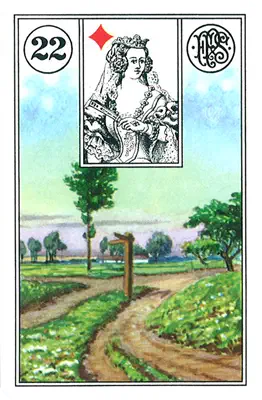
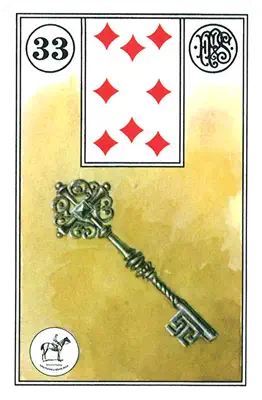
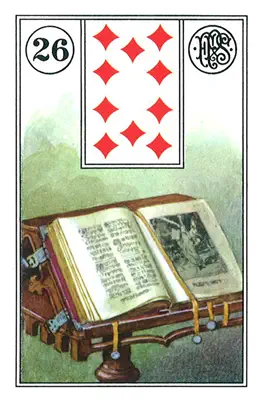
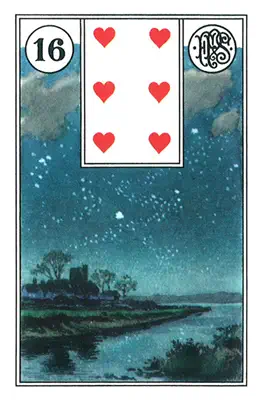
The Crossroads · The Key · The Book · The Stars
You want to start reading cards, and every shop offers twenty decks that are all “perfect for beginners.” The short answer takes three lines. For concrete answers about work, money or a person, choose Lenormand. To understand what you are going through, Triade or Work Your Light. For a ritual that follows the Moon, Moonology. To think through a decision, the I Ching. For matters of the heart, Belline. The long answer, with the criteria, the honest limits of each deck and a quiz, is right below.
Key takeaways
- There is no best oracle deck, only a deck suited to the kind of question you ask.
- Decks with the message printed on the card (Work Your Light, Moonology) can be read on day one; Lenormand and Belline take two to three weeks; the I Ching takes months.
- A direct deck (Lenormand) answers “what is happening?”; a symbolic deck (Triade, I Ching) answers “what should I do with what is happening?”
- You can try all six for free before buying anything.
- Learn one deck at a time: it is the advice every beginner wishes they had followed.
The comparison in two tables
The six oracles compared here are the ones you can draw and study on OracleNova. They cover the main families: traditional cartomancy (Lenormand, Belline), French initiatory decks (Triade), guidance decks from the English-speaking wellness world (Moonology, Work Your Light), and the oldest oracle system there is, the I Ching. Two of them, Belline and Triade, are French decks that are little known in English; they are worth knowing precisely because they fill gaps the popular decks leave open.
Table 1: identity and strongest point of each oracle.
| Oracle | Cards and origin | What it does best | Learning curve |
|---|---|---|---|
| Lenormand | 36 · Germany, 19th century | Concrete answers: work, money, people | Easy; read in combinations |
| Belline | 53 · France, drawn 1845-1865, published 1961 | Feelings, relationship situations | Medium; seven planetary families |
| Triade | 57 · France, 1992 | Understanding a life stage | Medium; rich symbolism |
| Moonology | 44 · United Kingdom, 2018 | Rituals, intentions, lunar rhythm | Very easy; message printed on the card |
| Work Your Light | 44 · United Kingdom, 2018 | Introspection, gentle guidance | Very easy; message printed on the card |
| I Ching | 64 hexagrams · China, about 3,000 years old | Decisions, the dynamics of a situation | Demanding; texts and changing lines |
Table 2: daily practice and honest limit.
| Oracle | Reading style | Time per reading | Its limit |
|---|---|---|---|
| Lenormand | Direct, everyday images | 5 to 20 min (Grand Tableau: an hour) | Says little about inner life |
| Belline | Symbolic, planets and emotions | 10 to 20 min | Harsh cards (Betrayal, Tomb) unsettle beginners |
| Triade | Initiatory, from Alpha to Omega | 15 to 30 min | Predicts little; frustrating if you want facts |
| Moonology | Guidance, plain-language messages | 3 to 10 min | Always kind, so rarely nuanced |
| Work Your Light | Meditative, affirmations | 3 to 10 min | Not built for a factual question |
| I Ching | Textual, meant to be pondered | 20 to 40 min | Old vocabulary, long learning curve |
The five criteria that actually matter
The right oracle is chosen on five criteria, in this order: the kind of question you ask, your taste for direct or symbolic language, the time you have, your tolerance for difficult cards, and the culture the deck comes from. Everything else, artwork included, comes after.
1. The kind of question
A factual question (“will I get this job?”) calls for a deck that names facts: Lenormand, Belline. A question of meaning (“why do I keep going in circles?”) calls for a deck that names stages: Triade, Work Your Light. A decision to weigh calls for the I Ching, which describes a situation and the direction it is moving in.
2. Direct or symbolic
Lenormand shows a house, a key, a road. What it shows is what it says. Triade shows Sacrifice, Fusion, Blessing: you read the symbol before you read the answer. If the second exercise bores you, stay with direct decks. If it draws you in, symbolic decks will give you more, for longer.
3. The time you have
A Moonology or Work Your Light draw takes three minutes and one card. A five-card Belline spread takes a quarter of an hour. An I Ching consultation with three coins, reading the judgment and the lines, takes half an hour of quiet. Choose the deck you will actually use, not the one you will admire on the shelf.
4. Tolerance for difficult cards
Belline contains Betrayal, Fatality, Illness. Lenormand contains the Coffin, the Scythe, the Whip. These cards describe situations, not sentences, but they shake a beginner. Moonology and Work Your Light have no negative card at all: restful in the first months, and also their ceiling.
5. The culture of the deck
Belline and Triade are French decks: their books, spreads and forums speak French. Moonology and Work Your Light come from the English-speaking wellness world and have the largest community online. Lenormand is German in origin and read all over Europe. The I Ching is Chinese and universal. A deck whose community speaks your language is learned twice as fast; if you read only English, that favors Lenormand, Moonology and Work Your Light, with OracleNova filling the gap for Belline and Triade.
The best oracle is not the most beautiful or the oldest: it is the one whose language matches your questions.
Each oracle in sixty seconds
Lenormand: the most concrete
Lenormand is a 36-card deck born in Germany in the early 19th century, based on Johann Hechtel’s “Game of Hope” and renamed after the French fortune-teller Marie-Anne Lenormand. It is read in combinations: one card says little, two cards side by side form a sentence. It is the ideal deck if you want clear answers about everyday life.
Choose it if your questions concern work, money, a move, a person. Avoid it if you mostly want to explore your inner life. To learn the method, start with the Lenormand guide, then with the cards that speak of love.
Belline: the most precise about feelings
The Oracle de Belline has 53 cards, drawn between 1845 and 1865 by the seer known as Edmond and published in 1961 by the Parisian clairvoyant Belline. Forty-nine cards fall into seven planetary families (Sun, Moon, Mercury, Venus, Mars, Jupiter, Saturn), joined by the Key, the Star of Man, the Star of Woman and the blue card. It is a deck that names emotions with rare finesse.
Choose it if your questions are about relationships, feelings, someone’s intentions. Avoid it if harsh cards worry you: better to come to it after a few months of Lenormand. The planetary structure is explained in the Belline guide and on the seven planets page. Its twelve love cards are read one by one in Belline Oracle in love.
Triade: the most initiatory
The Oracle de la Triade, created by Dominike Duplaa and published in 1992, lays out 57 cards from Alpha to Omega like a path through life: birth, trial, error, sacrifice, blessing, fusion. It borrows from mythology, alchemy, Kabbalah and astrology. It predicts almost nothing; it locates. A Triade reading tells you which stage you are at and what that stage asks of you.
Choose it if you are going through a transition and looking for meaning. Avoid it for practical questions. The Triade guide details the structure of the deck, and if you were hesitating between Triade and tarot, read Triade vs Marseille Tarot.
Moonology: the most ritual
Created by astrologer Yasmin Boland and published in 2018, the Moonology Oracle has 44 cards organized around the phases of the Moon and the zodiac signs. Every card carries its message in plain words. You draw it at the new Moon to set an intention, at the full Moon to take stock, or every morning as a card of the day.
Choose it if you like rituals and a frame that follows the calendar. Avoid it if you want a factual answer to a precise question: it will always answer gently, and sometimes beside the point. The Moonology guide explains the link between phases and messages.
Work Your Light: the gentlest
Rebecca Campbell’s Work Your Light Oracle, illustrated by Danielle Noel and published in 2018, has 44 cards in five suits: Confirmation, Inquiry, Action, Activation, Transmission. It reads like a meditation prompt more than a divination tool. No card in it is negative.
Choose it if you are starting out with some apprehension, or if you want a daily introspection ritual. Avoid it if your question expects a yes or a no. The five suits and the Work Your Light guide give you the instructions.
I Ching: the deepest
The I Ching is not a deck of cards but a Chinese book about three thousand years old, consulted through 64 hexagrams. You cast it with three coins or fifty yarrow stalks, and the result often contains two hexagrams: the situation and what it is turning into. It is the oracle of decisions.
Choose it if you like to read, reflect and return to a text. Avoid it as a first oracle if you want quick answers. The three-coin method is the simplest way in.
The quiz: which oracle suits you?
Five questions, one answer each. The result is not a verdict: it is the deck to start with, plus a runner-up in case the first one does not speak to you.
What about angel cards and the other popular decks?
Most “best oracle decks for beginners” lists in English are built around guidance decks: angel cards, animal spirits, goddess decks. They belong to the same family as Moonology and Work Your Light, with the same strengths (readable on day one, never harsh) and the same ceiling (little nuance, no factual answers). The criteria in this article apply to them as they are. If you want a guidance deck, pick the artwork that moves you; if you want answers, look at Lenormand or Belline.
The three mistakes of a first choice
Choosing on the artwork. A gorgeous deck whose language does not match your questions ends up in a drawer. Look first at what the deck can say, then at how it says it.
Buying three decks at once. Each oracle has its own reading logic. Learning three in parallel means mastering none. One deck, one notebook, three months: that is the rhythm that works.
Confusing gentleness with ease. Guidance decks are easy because they never say no. If you need a deck that will sometimes contradict you, choose one that can.
One deck, one notebook, three months. The rest of the shelf can wait.
How to try before buying anything
The most reliable way to choose is still to try. Draw one card a day with one oracle for a week, write down the card and what happened, then switch decks the following week. After a month, one of them will feel obvious. All six oracles in this article can be drawn for free on the readings page, with the full meaning of every card.
Where to start
If you are still hesitating, start with Lenormand: it is the deck that is learned the fastest while staying rich years later. If your questions are inner ones, prefer Work Your Light for its accessibility, then move to Triade when you want more depth. And once you have found your deck, keep a reading journal: it is the journal, more than the deck, that will make you a good reader.
Sources
- Oracle Belline, Wikipédia (in French): dating of Edmond’s drawings (1845-1865) and first edition (1960-1961).
- Oracle de la Triade, The World of Playing Cards: first edition by France Cartes, 1992.
- Work Your Light Oracle Cards, Penguin Random House: published June 5, 2018, Hay House.
- Moonology Oracle Cards, Yasmin Boland’s site: 44 cards, artwork by Nyx Rowan.
Frequently Asked Questions
→What is the easiest oracle deck for beginners?
The easiest decks are the ones with the message printed on the card: Work Your Light and Moonology. You can read them on day one with nothing to memorize. Lenormand comes next: its 36 everyday images are quick to learn, and it is the deck that grows with you the longest, because card combinations open up real depth.
→Lenormand or Belline: which one should I pick?
Lenormand if you want fast, concrete answers about work, money or a specific person. Belline if your questions are mostly about feelings and relationships: its 53 cards, grouped by planet, name emotions with a precision Lenormand does not have. Belline is a French deck, so most of its literature is in French; OracleNova offers every card meaning in English.
→Do I need to buy a physical deck to start?
No. The most reliable way to find out whether a deck speaks to you is to draw a few cards with it for a week or two. On OracleNova, all six decks can be drawn for free, with the meaning of every card. Buy the physical deck afterwards, once you know which one feels natural.
→Can I use more than one oracle deck?
Yes, and it is common: a concrete deck for practical questions, a guidance deck for daily draws. The advice for beginners is still to learn one deck at a time. Six months with one deck are worth more than six decks skimmed.
→Is one oracle more accurate than another?
No oracle predicts the future with certainty, and no deck is more “true” than another. What changes is the language: Lenormand speaks in facts, Triade in life stages, the I Ching in dynamics. An oracle is reliable when its language matches your question and you read it with a method.