Triade
The Oracle of the Triade: Everything You Need to Know
The Oracle of the Triade in brief: 57 cards, origin, triangle spread principle, symbolism and ideal user. The quick guide to discovering the contemporary introspective oracle.
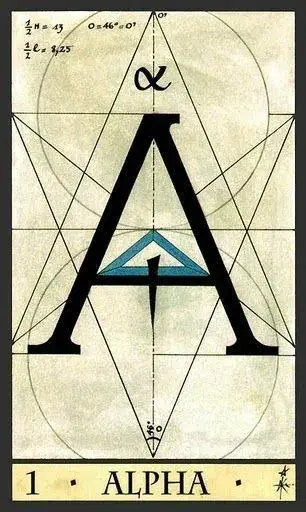
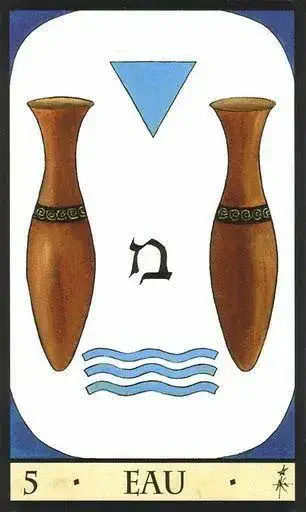
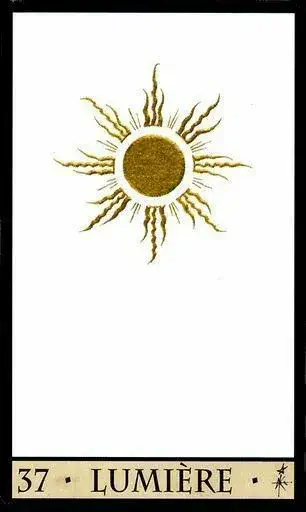
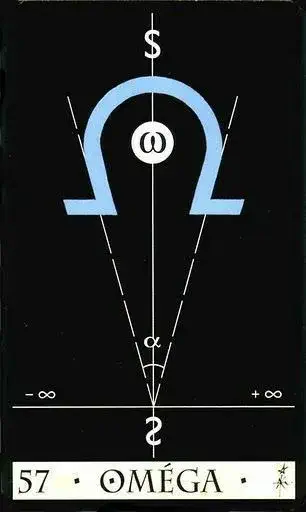
Alpha · Water · Light · Omega
The Oracle of the Triade is a contemporary deck of 57 cards, designed for introspection rather than prediction. This article gives you the essentials in 5 minutes: origin, structure, principle, symbolism, and ideal user profile. By the end, you'll know whether the Triade is for you and how to get started.
Origin: a contemporary tool
The Oracle of the Triade was created in 2002 by Didier Doncieux, a French writer and cartomancer, with illustrations by Daniel Coudoux. Unlike the Lenormand (heir to 19th-century German cartomancy) or the Marseille Tarot (15th-century Italy), the Triade carries no millennia-old tradition. It's a tool designed as a single piece, by a single author, with a clear project.
That newness is its strength: no exegetical baggage to integrate, no divergent schools, no contradictory interpretations accumulated over centuries. The Triade arrives «clean» in the hands of whoever opens it.
Structure: 57 cards, no division
The Triade has 57 cards, with no internal hierarchy. No Major/Minor as in tarot, no four suits, no court cards (Page, Knight, Queen, King). Each card is self-contained, carrying a unique name and its own meaning.
The names range from concrete to conceptual:
- Elements: Water, Fire, Earth, Air (under various names)
- Concepts: Alpha, Omega, Justice, Light, Silence
- Situations: Door, Journey, Adversity, Blessing
- Characters: Man, Woman, Brother, Adversary
A few emblematic cards: Alpha (the beginning), Omega (the completion), Water (emotional fluidity), Light (the clarity that dawns), Door (the threshold to cross), Wisdom (integrated knowing).
The principle: the triad in dialogue
The name isn't decorative. The Oracle of the Triade's signature method is to draw three cards that together form a message — the triad. The three cards aren't read in isolation but in dialogue: each illuminates the other two, and meaning emerges from their conversation.
The classic configurations:
- Past / present / future — the basic temporal reading
- Situation / obstacle / advice — for a decision to make
- Self / other / relationship — for a relational question
- Body / heart / mind — for a self check-in
You can of course draw more than three cards (five for a cross, nine for an extended tableau), but the triad remains the fundamental interpretive unit.
Symbolism: internal coherence
The Triade's conceptual strength lies in its internal coherence. Every card finds somewhere in the deck its echo or its opposite. A few examples:
- Alpha ↔ Omega: beginning / completion
- Water ↔ Fire: emotion / passion
- Day ↔ Night: conscious / unconscious
- Wisdom ↔ Illusion: seeing clearly / being blinded
- Life ↔ Death: what opens / what closes
This pairwise construction lets you read cards through each other. When Water appears in a spread, you can think of the absent Fire — what does that say? Symbolism operates by contrast as much as by content.
Approach: introspective, not predictive
This is the most important point to calibrate your use.
The Triade is not a fortune-telling oracle. Doncieux didn't design it to announce future events («they'll come back», «you'll get the job»). He designed it to illuminate what's playing out inside — your relationship to a situation, your blind spot, your forgotten resource.
In practice, ask the Triade questions like:
- «What's playing out for me in this situation?»
- «What's my blind spot?»
- «What resource do I have that I'm not using?»
- «What attitude would help me move forward?»
Avoid:
- «Will they love me?» (binary, predictive)
- «When will I receive that news?» (calendar)
- «What number will come up?» (external determinism)
The Triade answers poorly to those — not by limitation, but by design.
For whom?
The Triade is for you if you:
- are starting in cartomancy and want an accessible tool
- prefer immediate intuition to symbolic erudition
- are looking for a personal reflection companion (journal, meditation)
- feel uneasy with ancient imagery (royal figures, medieval allegories)
- want a contemporary tool that «speaks your language»
- mostly draw for yourself, in introspective mode
The Triade is less suited if you:
- look for a tool with great historical and exegetical depth (prefer the Marseille Tarot)
- want to predict specific events (prefer the Lenormand)
- are drawn to astrology and cosmological correspondences (prefer astrological oracles)
No tool is universal. The right tool is the one that matches your temperament and the type of question you ask.
How to start
Three steps to begin today.
1. Get a deck. The Oracle of the Triade is available from most specialized publishers (Trajectoire, Guy Trédaniel in France; international shipping available). Count €25-35 for the box with booklet.
2. Read the accompanying booklet. Doncieux gives his own interpretation of each card — that's the reference material. Many try to «guess» the cards without the booklet; it's more effective to absorb it first, then develop intuition on top.
3. Start with one card a day. Pull a single card on waking with the question «What energy accompanies me today?». Note your interpretation, compare at day's end. Within two to three weeks, you'll recognize cards at a glance.
Once that base is set, move to three-card triads. That's where the oracle reveals its full depth.
To go further
On OracleNova, you can:
- Explore the 57 Triade cards one by one with detailed meanings
- Discover the triangle spread method — the signature reading
- Compare the Triade with the Marseille Tarot in our article Triade vs Marseille Tarot
The Triade is an oracle you adopt by affinity — not by tradition. If the idea of a contemporary, accessible, introspective tool draws you in, it's probably the right choice. Otherwise, OracleNova offers other decks that match other temperaments.
In summary
The Oracle of the Triade is a contemporary deck (2002, Didier Doncieux) of 57 cards with no internal hierarchy, organized in coherent symbolic pairs. Its signature method is the triad — three cards in dialogue. Its approach is introspective rather than predictive. It suits beginners and practitioners looking for an accessible daily reflection tool.
It's an oracle that owns its modernity. No millennial mystique, no accumulated esotericism — just 57 contemporary archetypes rigorously organized, and three cards talking to each other.
Frequently Asked Questions
→Who created the Oracle of the Triade?
The Oracle of the Triade was created in 2002 by French writer and cartomancer Didier Doncieux, with illustrations by Daniel Coudoux. It's a contemporary tool designed as a single piece with strong symbolic coherence — each card finds its echo or opposite elsewhere in the deck.
→How many cards are in the Triade?
57 cards, with no Major/Minor split and no court cards (King, Queen, etc.). Each card carries a unique name (Alpha, Water, Light, Justice, Omega…) and a self-contained meaning. That structural simplicity is what sets it apart from tarot or Lenormand.
→Why «Triade»?
Because the signature method is to draw three cards that converse with one another to form a global message. The triad — three elements in dialogue — is the base of every reading. You can draw more cards, but three remains the fundamental interpretive unit.
→Is it a predictive tool?
Rather introspective. Doncieux didn't design the Triade to announce future events but to help understand a situation, shift a viewpoint, illuminate an inner dilemma. The cards say «what's at stake» rather than «what will happen».
→Who is the Triade for?
For someone who wants an accessible tool for personal questioning without having to digest a millennial tradition. It suits cartomancy beginners, practitioners looking for a daily coaching tool, and anyone who prefers immediate intuition to symbolic erudition.